All Regarding Court Reporting: Important Insights Into Its Relevance in Law
Court reporting serves a necessary feature within the lawful framework, giving a precise and trustworthy record of proceedings. Through sophisticated methods and tools, stenotype reporter record the subtleties of statements and legal dialogue. The value of their work prolongs beyond plain transcription. As the lawful landscape progresses, so as well does the function of innovation in court reporting. Comprehending these characteristics discloses much deeper effects for justice and transparency in the legal system.
The Function of Court Reporters in the Legal System

Frequently forgotten, court press reporters play a vital duty in the legal system by ensuring a accurate and verbatim record of process. Their primary obligation includes recording spoken words during trials, depositions, and other lawful occasions, which acts as an official document for future reference. This documentation is necessary for charms, as it provides the required details for assessing decisions made by courts and courts.
Court press reporters must possess remarkable listening skills and a deep understanding of legal terminology to record the nuances of testimony and argumentation properly. Their work adds to transparency within the judicial procedure, allowing for accountability and fairness. Additionally, they assist in accessibility to justice by making records available to entailed parties, making sure that every person has the possibility to assess the process. By doing this, stenotype reporter promote the integrity of the legal system, strengthening the significance of exact interaction in matters of legislation.
Methods and Devices Utilized in Court Reporting
In court reporting, various strategies and devices boost the precision and performance of transcription. Stenography innovation plays a significant function, permitting press reporters to capture talked words quickly, while digital recording methods offer different options for documents. Comprehending these tools is vital for comprehending how court press reporters accomplish their critical feature in the lawful system.
Stenography Modern Technology Summary
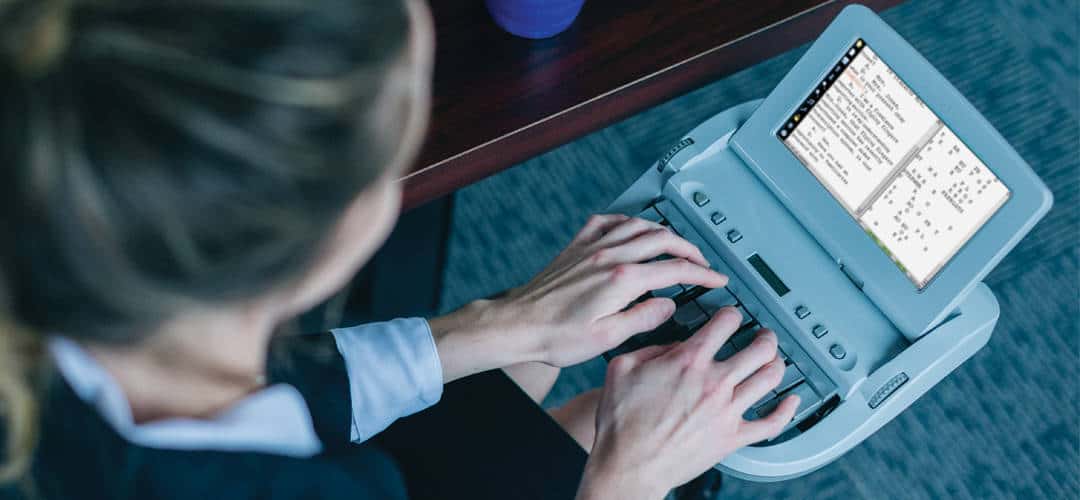
Stenography technology acts as the foundation of modern-day court reporting, making it possible for reliable and specific transcription of talked dialogue. Using specialized devices called stenographs, stenotype reporter can capture speech at amazing speeds, frequently surpassing 200 words per min. These makers employ a distinct keyboard design that allows multiple keys to be pushed concurrently, producing phonetic representations of words - durham court reporting. This technique minimizes the demand for comprehensive punctuation and enhances transcription accuracy. Additionally, stenographers make use of numerous shorthand techniques and signs to more simplify the procedure, making certain that no information is ignored throughout proceedings. The assimilation of stenography technology not just cultivates efficient communication in legal setups yet also promotes the stability of the judicial process by supplying trusted and exact records of conversations
Digital Recording Techniques
An enhancing number of court reporting experts are turning to electronic recording techniques to boost the accuracy and effectiveness of their transcriptions. These strategies make use of advanced sound and video innovation to record proceedings in real-time. Digital recorders, usually paired with premium microphones, ensure that every word talked is preserved with clarity. Furthermore, specialized software can record audio documents automatically, enabling for quicker turn-around times. Some experts incorporate twin recording systems for redundancy, ensuring no important details is lost. Furthermore, digital recordings can be easily indexed and browsed, facilitating swift access of specific sections. As lawful environments develop, embracing these electronic tools not only enhances the reporting process however also keeps the integrity of the record.
The Relevance of Accuracy in Transcription
Precision in transcription is crucial in court reporting, as it guarantees that legal documents mirror truth content of procedures. This precision can considerably affect case results, affecting the decisions made by discretionary. Subsequently, preserving high requirements of accuracy is vital in the lawful profession.
Accuracy in Lawful Records
Although the legal system counts heavily on significant disagreements and convincing rhetoric, real foundation of judicial procedures depends on the accuracy of lawful records. Accurate transcription is essential, as it guarantees that every statement, inquiry, and ruling is recorded correctly. Such precision offers multiple functions, consisting of offering a trustworthy recommendation for allure procedures and maintaining the integrity of the judicial system. Errors in transcription can bring about misconceptions, false impressions, and possibly destructive repercussions for all celebrations involved. Court press reporters must possess phenomenal skills and attention to information, as their work straight affects the clarity of lawful papers. Inevitably, the accuracy of lawful records underpins the count on positioned in the judicial procedure, enhancing the relevance of meticulous transcription.
Influence On Case Outcomes
When legal proceedings unfold, the precision of transcription commonly determines the trajectory of a case's outcome. Accurate court reporting warranties that every word talked is successfully recorded, making it possible for attorneys, courts, and courts to make enlightened Homepage choices based upon the record. Errors in transcription can result in misconceptions, misconceptions, and potentially unfair verdicts. The honesty of lawful records relies heavily on the accuracy of these documents, as they function as the structure for allures and more lawsuits. In high-stakes cases, where the implications are profound, the duty of a court press reporter ends up being much more vital. Consequently, keeping rigorous standards in transcription not just supports the legal procedure however likewise supports the concepts of justice and justness in the court room.
Court Reporting in Various Legal Settings
Court reporting plays a necessary function across various lawful setups, making sure that procedures are properly documented for future recommendation. In criminal court, court reporters transcribe testimonies, evidence, and judicial judgments, which are crucial for allures and instance testimonials. In civil lawsuits, accurate transcripts facilitate the discovery procedure and give a reliable document for test procedures. Furthermore, administrative Go Here hearings usually depend on stenotype reporter to maintain a main record, making sure transparency and liability in governmental processes. Family members courts also benefit from court reporting, as precise documents of process can influence safekeeping decisions and negotiations. Furthermore, depositions in pre-trial stages call for precise recordings to record the subtleties of witness statements, which may be substantial in forming instance approaches. On the whole, court reporting functions as a cornerstone in the legal system, cultivating justness and clarity throughout diverse judicial settings.
The Influence of Modern Technology on Court Reporting
As technology proceeds to develop, its influence on court reporting has actually ended up being significantly substantial. Innovations such as electronic recording, real-time transcription software application, and fabricated knowledge have transformed traditional practices. Digital audio recorders currently capture court proceedings with exceptional clarity, enabling stenotype reporter to focus on nuances and context rather than solely on keying. Real-time transcription modern technologies make it possible for instant access to transcripts, promoting efficiency and boosting cooperation among legal experts. Additionally, synthetic intelligence devices are being integrated to help in the transcription process, reducing human error and expediting file generation. Despite these advancements, the essential skills of stenotype reporter stay important, as they give a nuanced understanding of lawful language and court room dynamics. Inevitably, modern technology enhances as opposed to replaces the competence of court reporters, guaranteeing that the honesty and accuracy of legal documentation are upheld in a progressively digital landscape.
Occupation Opportunities and Pathways in Court Reporting
The advancement of innovation in court reporting has actually opened a range of career possibilities for aiming professionals in the field. Typically, stenotype reporter were largely accountable for transcribing legal procedures. Advancements such as digital recording and real-time reporting have actually expanded their roles.
Today, court press reporters can specialize in areas such as captioning for tv broadcasts, offering transcription solutions for lawful companies, and operating in the company industry for depositions or meetings - durham court reporting. In addition, possibilities in remote reporting, especially due to the rise of digital court rooms, have ended up being progressively prevalent
Educational pathways include formal training programs, accreditation courses, and continuing education to stay upgraded with technical modifications. Networking within expert and lawful companies also plays a considerable duty in job advancement. On the whole, the diverse opportunities in court reporting show the dynamic nature of the legal occupation and the raising need for proficient professionals.
The Future of Court Reporting in an Evolving Legal Landscape
Exactly how will the duty of court reporting adjust as the lawful landscape continues to advance? As innovation advances, court reporting is most likely to More Bonuses accept cutting-edge devices such as expert system and real-time transcription software application. These improvements might improve accuracy and efficiency in capturing legal proceedings. The increasing frequency of remote hearings demands that court reporters end up being skilled in digital platforms, ensuring seamless paperwork no matter of area.
Concurrently, stenotype reporter will require to adjust their abilities to handle new kinds of instances, such as those including cyber law and copyright conflicts, which need specialized expertise. Additionally, the need for instant accessibility to transcripts will push professionals to supply quicker turn-around times without compromising quality. Ultimately, the future of court reporting will rest on a balance between traditional skills and technological assimilation, guaranteeing that the honesty of the legal process continues to be intact in a significantly digital world.
Frequently Asked Questions
How Do Court Press Reporters Handle Delicate Details Throughout Proceedings?
What Credentials Are Needed to Become a Stenotype Reporter?
To end up being a court press reporter, individuals commonly need a high institution diploma, specialized training from a recognized program, efficiency in shorthand or voice writing, and certification or licensure, depending on state demands and policies.
Are Court Reporters Required to Have a Permit?
Court reporters are typically called for to get a certificate, relying on the territory. Licensing assurances that they meet particular criteria of proficiency and professionalism and trust, which is essential for keeping the stability of legal procedures.
Just How Do Stenotype Reporter Handle Different Accents and Languages?
Stenotype reporter manage different accents and dialects via substantial training, technique, and familiarity with various speech patterns. They frequently make use of specialized software application and strategies to accurately capture spoken words, guaranteeing clarity and precision in their transcripts.
What Is the Ordinary Salary for a Court Reporter?
The typical salary for a stenotype reporter varies by location and experience, commonly ranging from $50,000 to $80,000 yearly. In high-demand locations, incomes can go beyond $100,000, reflecting the career's significance and specialized abilities.
Often forgotten, court press reporters play an important role in the legal system by ensuring a accurate and verbatim record of process. In criminal court, court press reporters transcribe testaments, evidence, and judicial judgments, which are important for allures and case testimonials. Household courts also benefit from court reporting, as exact documentation of proceedings can affect wardship decisions and settlements. Typically, court press reporters were largely accountable for recording legal proceedings. Today, court press reporters can specialize in areas such as captioning for tv programs, supplying transcription solutions for legal companies, and functioning in the business market for depositions or meetings.
Comments on “Durham court reporting costs: breaking down the fees”